About FLARE
Segmentation for Severity Assessment
Accurate plant leaf disease severity assessment relies on lesion morphology and spatial distribution. Traditional end-to-end models often entangle lesion, leaf, and background features, limiting fine-grained representation. FLARE leverages dual-stream segmentation (FLLA-Net) and relational modeling (ERMA-Net with VRM) to separately capture lesions and leaves and model their spatial-semantic relationships, enabling precise, biologically meaningful severity estimation across diverse growth stages and lesion patterns.
Generalization Discussion
FLARE enhances disease severity assessment by explicitly capturing lesion and leaf features and modeling their spatial–semantic relationships, mimicking human visual perception. Leveraging the VAE-Module and VRM-Module, it learns robust, disentangled representations refined with textual semantics and reinforcement-guided contrastive learning. This enables accurate, transferable severity prediction even on unseen diseases, making FLARE highly effective for real-world agricultural applications.
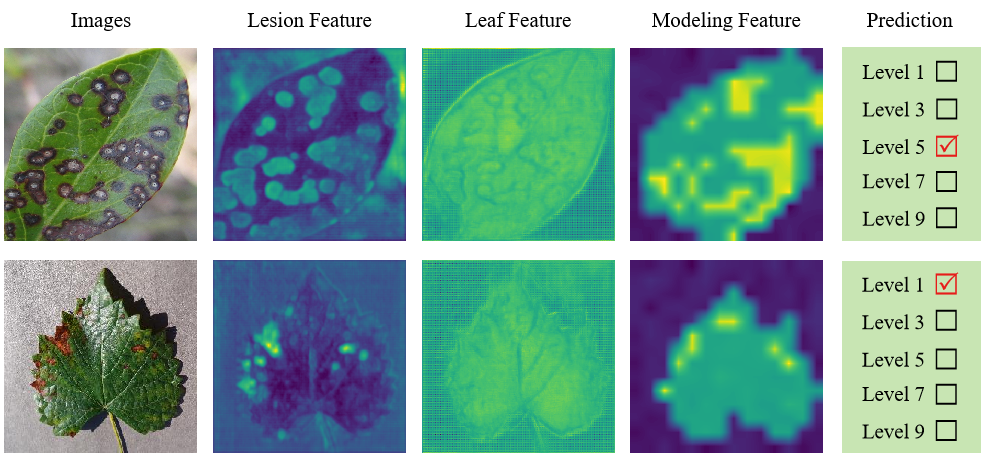
Figure 1: Generalization evaluation of our model in unseen-category scenarios.
Advantages and Disadvantages
We introduce FLARE, an explicit vision relational modeling framework for plant leaf disease severity assessment. It captures lesion and leaf features and models their structural relationships, reducing background interference and reflecting true lesion distributions. However, challenges remain, including limited samples for certain crops or severity levels, which can cause data imbalance, and difficulties in accurately identifying key regions under leaf occlusion, partial lesions, or image blur, potentially affecting severity prediction.